

By BAM Capital Founder & CEO, Ivan Barratt
We’re witnessing something rare in today’s environment: bipartisan interest in regulating a sector of the U.S. economy. The U.S. Senate has just cleared a bill that would severely limit investor-owned single-family rentals. When policymakers as different as Elizabeth Warren and Donald Trump are proposing similar regulations, it’s news worth paying attention to.
For smart investors, this isn’t about politics. It’s about risk.
Housing affordability has become a kitchen-table issue across the country. As frustration builds, regulatory change often follows. For investors, the question isn’t whether to debate the policy — it’s how to position capital wisely if new rules reshape parts of the real estate market.
That’s where multifamily deserves renewed attention.
For decades, single-family rentals have been viewed as a straightforward path to appreciation and income. But when large pools of capital compete for the same homes that first-time buyers are trying to purchase, friction is inevitable. If new policies limit acquisitions or add more compliance burdens, the risk profile of that segment shifts. But multifamily properties operate differently.
At its core, multifamily investing increases housing supply. The United States remains millions of units short of meeting demand. At the same time, higher mortgage rates and stricter loan qualification standards have pushed homeownership further out of reach for many families. As a result, demand for quality rental housing has not weakened — it has increased.
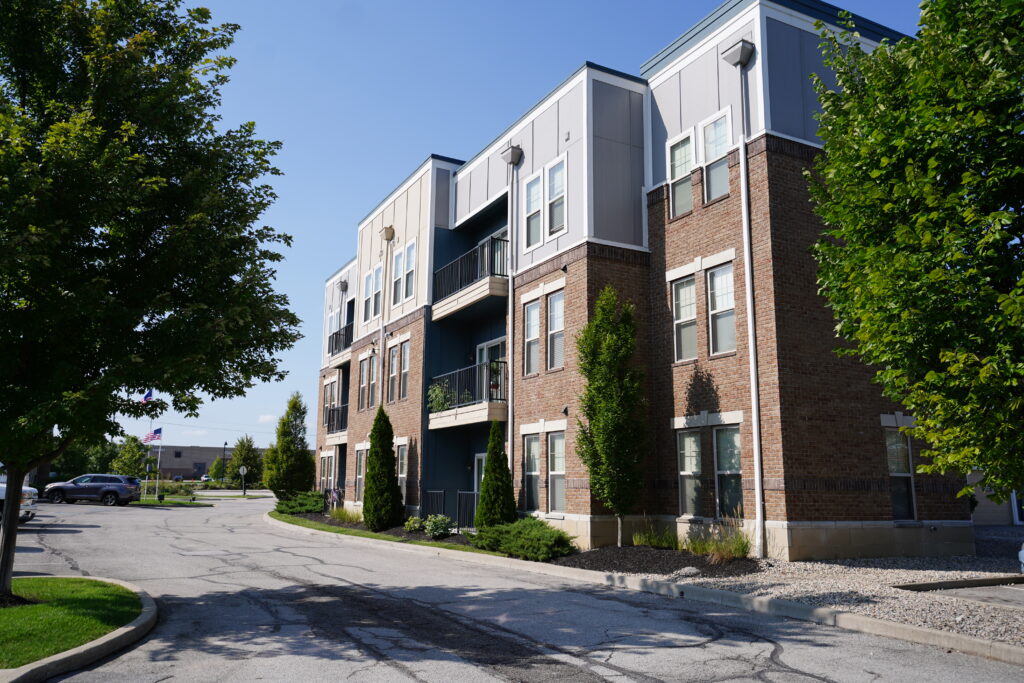
Professionally managed apartment communities meet that demand at scale. They provide safe and well-maintained housing near schools, parks and places of employment. These communities often serve as a financial launchpad for many residents as well, offering stability while families build savings, get their credit score up and prepare to own a home someday.
From an investment standpoint, multifamily developments benefit from advantages that are difficult to replicate in portfolios of scattered single-family properties. Economies of scale matter. When 100, 200 or 300 units operate within a community, maintenance teams are centralized, renovations can be handled efficiently and operating costs are spread across a broader base. That scale leads to more predictable cash flow and smooth operations.
Just as important, multifamily aligns more naturally with public policy goals regarding housing. Rather than competing with first-time buyers for limited starter homes, multifamily investment adds density where appropriate and revitalizes existing properties. It expands options without removing inventory from the for-sale market.
There is also a broader historical lesson here.
The housing market has experienced moments of significant volatility over the past two decades. The Great Financial Crisis tested homeowners, lenders and investors alike. I’ve lived through 2008, and like many Americans, watched how quickly markets can turn. More recently, the pandemic disrupted nearly every sector of the economy, but its effects on the housing market specifically are still enduring.
Through those cycles, one constant has remained: People need a place to live.
During economic downturns, households might delay purchasing a home. They might seek more affordable options or adjust their living arrangements. But the demand for rental housing persists. Well-located multifamily assets have historically demonstrated resilience because they serve a fundamental need.
Of course, that does not make this asset class immune to risk. Interest rates, the job market and operating costs all matter. Discipline in underwriting remains essential. But compared to sectors more vulnerable to regulatory swings or consumer spending, multifamily has shown consistent durability.
In markets across the Midwest, I’ve seen multifamily investment contribute greatly to community restoration.
Upgraded appliances, enhanced security, modernized units and improved common areas elevate living standards. And when owner-operator investments are involved, as my team can attest, it creates an even better product for tenants and better returns than a typical multifamily investment where property management has been outsourced.
Put more concisely, responsible ownership strengthens neighborhoods while generating returns.
The current bipartisan scrutiny of single-family investment should be viewed through that lens. Housing occupies a unique place in the American economy. Asset classes that expand supply and support affordability are more likely to maintain public support.
For investors evaluating where to park their money, the conversation underway in Washington offers a powerful reminder. Regulatory landscapes can shift.
Demographics and demand fundamentals move more gradually and predictably.
Multifamily sits at the intersection of those trends. It benefits from persistent rental demand, operational efficiencies and alignment with community needs. It provides housing for families today while preserving a path to ownership tomorrow.
In a period when parts of the real estate market may face new constraints, stability becomes more valuable. Multifamily’s track record and legacy in the U.S. market demonstrate it is a wise path to diversifying your investment portfolio.
For investors seeking resilience in a changing environment, that reliability is difficult to overlook.

Founder & CEO
As first seen in the Indianapolis Business Journal.

“
Everyone I’ve spoken with really takes the time to get to know me as an investor. I have invested with other operators, and BAM [Capital] has by far been the best one.
– Dr. Taha S., Surgeon
“
It feels like a family, and we appreciate the transparency that we get as being part of that family. To invest with BAM Capital is to put your hands in people you trust.
– Andrea F., Investor Since 2022
“
I want a place where we can see our hardworking money that grows safely, and that’s what BAM [Capital] has been doing for us. We were lucky to have found a company like this that we can trust.
– Lulu W., Investor Since 2016
“
Sometimes investing seems cold and impersonal. However, for us, investing with BAM [Capital] feels like a warm, high-touch, professional experience. Their team is dedicated to financial success for all, and we appreciate the attention to detail, and care for their community.
– Valerie & Jenni, Real Estate
“
I have many years of experience as a financial Executive in Private Equity owned companies and am very impressed with the sharp, diligent, and methodical manner in which Ivan and his team run their businesses and work with their limited partners. I have invested in several projects and have been very satisfied with the results thus far.
– Jemmie W., Private Equity Consultant
Multifamily Portfolio
The BAM Multifamily Growth Fund V is built to provide a balance of tax benefits, capital appreciation, and long-term wealth creation for investors. This exclusive investment opportunity targets Class A assets in Midwest markets with strong demographics and supply-demand imbalances. It also offers significant tax advantages through strategic investments and depreciation. Key highlights of Fund V include:
Pref Equity/Debt Fund
The BAM Preferred Credit Fund is designed to provide investors with stable, above-average risk-adjusted income by primarily making preferred equity investments in apartment communities, focusing on those that we own and operate. Our open-ended fund structure is designed for investors with a $5 million net worth minimum, focused on liquidity needs in today’s high-interest rate environment. Key highlights include:
Disclaimer: This content is for informational purposes only and is not financial, tax, legal, or investment advice, nor an offer or solicitation to buy or sell securities. Investment opportunities offered by BAM Capital and its affiliates are made pursuant to Rule 506(c) of Regulation D, available exclusively to accredited investors, as defined by the Securities and Exchange Commission (SEC) and, if applicable, qualified purchasers, as defined by Section 2(a)(51) of the Investment Company Act of 1940. Verification of accredited investor status is required before participation in any investment.
Contact BAM Capital for details on current offerings. BAM Capital and its representatives are not fiduciaries or investment advisors. The information provided is general and may not reflect individual financial goals. Financial terms, projections, or forward-looking statements contained herein are hypothetical and should not be interpreted as guarantees of future performance or safety. Such statements reflect BAM Capital’s opinion and are subject to market fluctuations, economic conditions, and investment risks. Investing in private real estate securities involves significant risks, including, without limitation, illiquidity, economic downturns, and potential loss of invested funds or capital. Past performance does not predict or guarantee future results. Historical transaction figures represent past performance across multiple deals as of the date this information was published, not a single investment transaction. BAM Capital and its affiliates do not guarantee the accuracy or completeness of this information. Prospective investors are strongly encouraged to conduct independent due diligence and consult with legal, tax, and financial advisors before making any investment decisions.
© 2026 BAM Capital. All rights reserved.