

Case Study: Nese Apartments
In early 2026, BAM Capital opposed a nearby zoning proposal for a development near Nese Apartments in Whitestown, Indiana, over concerns about resident safety, quality of life, and the asset’s long-term value.
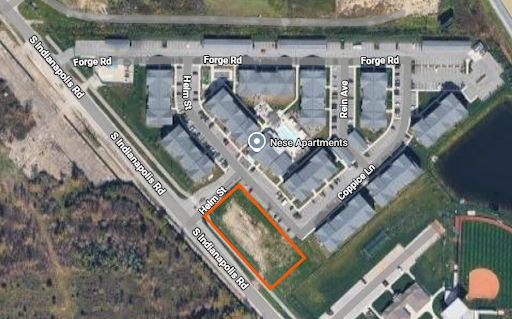
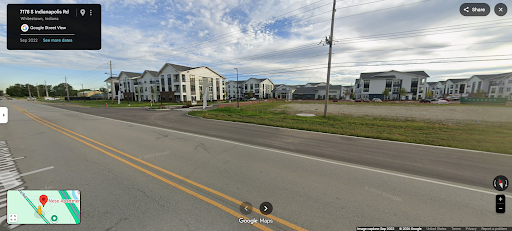
A gas station and convenience store was planned adjacent to the community’s main entrance on a roughly 1-acre parcel at 7065 S. Indianapolis Road. The project would have included 10 fueling stations, underground fuel storage tanks, and 24-hour operations.
Because BAM Capital operates as a vertically integrated platform, with legal, asset management, and property management teams in-house, the team responded immediately. This alignment allowed the firm to effectively contest the proposal, ultimately resulting in the denial of the special exception at the April 2, 2026, Whitestown Board of Zoning Appeals hearing.
This case demonstrates how BAM Capital’s internal resources enable a proactive approach to supporting the interests of both residents and investors.
Asset Overview
BAM Capital has owned and operated Nese Apartments since February 2024. The community serves about 300 residents in Whitestown, a fast-growing town about 20 miles northwest of downtown Indianapolis. The property is a true home for its residents, featuring fitness and yoga studios, a pickleball court, an outdoor kitchen, and a saltwater pool.
The asset sits directly next to the proposed development site, with its main entrance facing the parcel. Any change to the neighboring site would have had a direct impact on the community.
The Challenge
In early 2026, a gas station developer and operator submitted a petition for a special exception to construct and operate the business on the site along Indianapolis Road.
The plan required access across property controlled by Nese Apartments, raising questions about whether the project could realistically proceed.
The proposal also introduced several other concerns, including:
- Direct adjacency to Nese Apartments and its amenities
- 24-hour fueling operations with lighting, noise, and constant traffic
- Underground fuel storage tanks near a large residential community
- Increased traffic, including commercial trucks, at the community’s entrance
- Environmental and health risks from fuel emissions
- Potential effects on the asset’s value, stability, and livability
BAM Capital’s Response Strategy
BAM Capital responded promptly after receiving formal notice, submitting an objection on March 25, 2026.
Chelsea Spickelmier, an Associate General Counsel, noted:
“Because we have legal, asset management, and operations all in-house, we were able to move quickly. There was no delay, no outside coordination—we were aligned from day one.”
The company’s response was structured around three coordinated areas:
A. Legal and Planning Strategy
BAM Capital prepared a formal objection under the Whitestown Unified Development Ordinance, challenging whether the proposal met required standards for factors such as public health, safety, compatibility, and infrastructure.
B. Site Control and Feasibility Analysis
The team identified that the proposed plan depended on access to Helm Street, a private road owned by Nese Apartments, and additional frontage controlled by the asset. Without these access points, the project could not move forward as designed.
A review of the site layout also revealed potential conflicts with access and curb-cut spacing requirements along Indianapolis Road. No variances or ordinance relief were requested with the application, which further called into question the feasibility of the proposal.
C. Impact Assessment
The legal and asset management teams evaluated the impacts on residents, including noise, lighting, traffic, and environmental factors, as well as potential effects on property value and financing. A supplemental submission also raised concerns about the applicant’s traffic study, which included incomplete data and unrealistic assumptions.
Because BAM Capital owns and operates the community, the team was able to consider both technical factors and the well-being of residents.
The Outcome
BAM Capital actively participated in the zoning process leading up to the April 2, 2026, hearing, presenting a case focused on resident impact, site feasibility, and inconsistencies in the application.
As Ryan Thie, VP of Asset Management, explained:
“As soon as we received notice, we were in motion. Having an in-house legal team and asset management working together allowed us to respond in a matter of days, not weeks.”
At the April 2 hearing, the Whitestown Board of Zoning Appeals voted 3-0 to deny the special exception request. The proposed gas station and convenience store did not move forward, preserving a safe and comfortable home for residents at Nese Apartments and avoiding a high-traffic commercial use next to the community.
Why It Matters
This case study demonstrates how active asset management goes beyond day-to-day operations. BAM Capital identified the issue early and responded by aligning internal teams, participating in the zoning process, and advocating for both residents and investors.
For residents, this helped preserve a safe and comfortable living environment. For investors, it protected the asset’s value and long-term marketability.
BAM Capital’s vertically integrated model sets it apart from most real estate sponsors, enabling it to respond decisively when it matters most.
“This is one of those behind-the-scenes examples of active asset management in practice,” Katherine Herron, VP of Investor Relations, noted. “Our responsibility to investors doesn’t stop once we acquire a property. It includes protecting the long-term quality and positioning of assets over time.”
Key Takeaways
- Adjacent projects can create risks: Nearby development can directly impact property value and performance.
- Speed matters: In-house teams enable action in days, not weeks or months.
- Control creates leverage: Full ownership of the asset gives meaningful influence over outcomes.
- Resident experience drives value: Prioritizing quality of life supports long-term performance.
- Active management matters: Strong investments require ongoing, hands-on management rather than passive oversight.
Disclaimer: This case study is for informational purposes only and is not financial, tax, legal, or investment advice, nor an offer or solicitation to buy or sell securities. BAM Capital and its representatives are not fiduciaries. Investment opportunities offered by BAM Capital are made pursuant to Rule 506(c) of Regulation D, available exclusively to accredited investors, as defined by the Securities and Exchange Commission (SEC) and, if applicable, qualified purchasers, as defined by Section 2(a)(51) of the Investment Company Act of 1940. Verification of accredited investor status is required before participation in any investment. Any financial terms, projections, or forward-looking statements contained herein are hypothetical and should not be interpreted as guarantees of future performance or safety. Such statements reflect BAM Capital’s opinion and are subject to market fluctuations, economic conditions, and investment risks. Investing in private real estate securities involves significant risks, including but not limited to illiquidity, economic downturns, and potential loss of invested funds. Past performance does not guarantee future results. Historical transaction figures represent past performance across multiple deals as of the date this information was published, not a single investment transaction. Prospective investors are strongly encouraged to conduct independent due diligence and consult with legal, tax, and financial advisors before making any investment decisions.
© 2026 BAM Capital. All rights reserved.