Key Trends and Insights for Passive Real Estate Investors
Our April update shows a market finding its footing again as it works through the high volume of new apartment deliveries over the past two years. Demand remains steady, supported by a job market that continues to show resilience. Below, we break down national trends and examine how key markets—from Indiana to Pennsylvania—are positioned for the months ahead.
The Big Picture: Supply Is Falling While Demand Holds
Nationally, we’re seeing the slowest pace of new construction since 2016. Apartment completions dropped more than 30% year over year, and vacancy held steady for the second straight quarter at 9.4%¹. That signals the market is working through the recent surge in supply.
The more significant shift is occurring in the development pipeline. With fewer projects breaking ground, supply pressure is expected to continue easing throughout 2026. As that backlog clears, the market is likely to gain momentum later this year.
At the same time, demand isn’t going anywhere. The U.S. added roughly 200,000 jobs in March, and unemployment remains near 4%, according to the U.S. Bureau of Labor Statistics. Steady employment and income support on-time payments and strong lease renewals across BAM Capital’s portfolio.
Indiana: Demand Is Pulling Ahead
In Indianapolis, vacancy is projected by third-party analysts to fall to 4.2% in 2026, which would represent a third consecutive year where demand exceeds supply.
Inventory growth has slowed to around 1.1%, but rents continue to trend upward. As fewer new units come online, competition tightens, reducing the need for concessions and supporting stronger occupancy and more consistent revenue growth.
On the economic side, long-term demand is being reinforced by major investment. Eli Lilly’s $13 billion commitment to the LEAP Lebanon Innovation District, along with early-stage plans for advanced energy infrastructure, points to a sustained growth corridor supported by both private capital and state coordination.
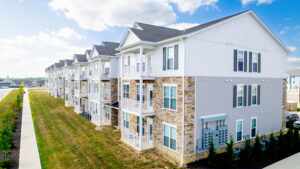
Nese Apartments, a BAM Capital asset, benefits from its proximity to the Lebanon and Kokomo corridors, positioning it to capture long-term job growth driven by new infrastructure investment.
Des Moines, Iowa: Supply Normalizes as Demand Outpaces Deliveries
Des Moines is seeing a favorable shift as demand is projected to reach 1,050 units, outpacing the 900+ units expected to be delivered this year².
Meanwhile, new construction is slowing, with fewer projects breaking ground than usual. That’s helping the market rebalance as existing supply is absorbed. As this shift plays out, a few trends typically follow:
- Vacancy starts to move lower
- Competition from new deliveries eases
- Fewer concessions are needed to stay leased
Economic momentum is also supporting the market. State-backed incentives tied to more than 500 new jobs and over $250 million in capital investment are adding to the local employment base, according to the Iowa Economic Development & Finance Authority.
For BAM Capital, this environment supports steady occupancy gains and more measured rent growth without aggressive leasing.
Kansas City, Missouri: Steady Fundamentals and Consistent Performance
Kansas City continues to deliver stable multifamily performance, with occupancy holding in the mid-90% range and rents up approximately 2.5% year over year, according to third-party reports.
Below-average unemployment supports a consistently employed renter base, helping reduce leasing volatility and supporting stable rent collections.
At the same time, ongoing manufacturing expansion and data center development are adding both near-term job creation and longer-term economic depth to the region.
With unemployment at a low 3.5% and significant new infrastructure investment, Kansas City offers a stable economic backdrop for our portfolio’s operations.
Northwest Arkansas: Strong Demand, Room to Grow
Northwest Arkansas remains one of the strongest markets in the portfolio. Occupancy is projected to approach 97% in 2026, with rents continuing to rise.
Affordability is a key differentiator. In Northwest Arkansas, the “Wallet Share of Income” is expected to be 16.3%, significantly lower than the national average of 27%³, which is a metric BAM Capital monitors to assess resident retention potential. Together, high occupancy and relative affordability create a durable foundation for continued growth.
The region is also seeing more than $300 million in mixed-use and cultural investment, which is enhancing livability and attracting new residents.
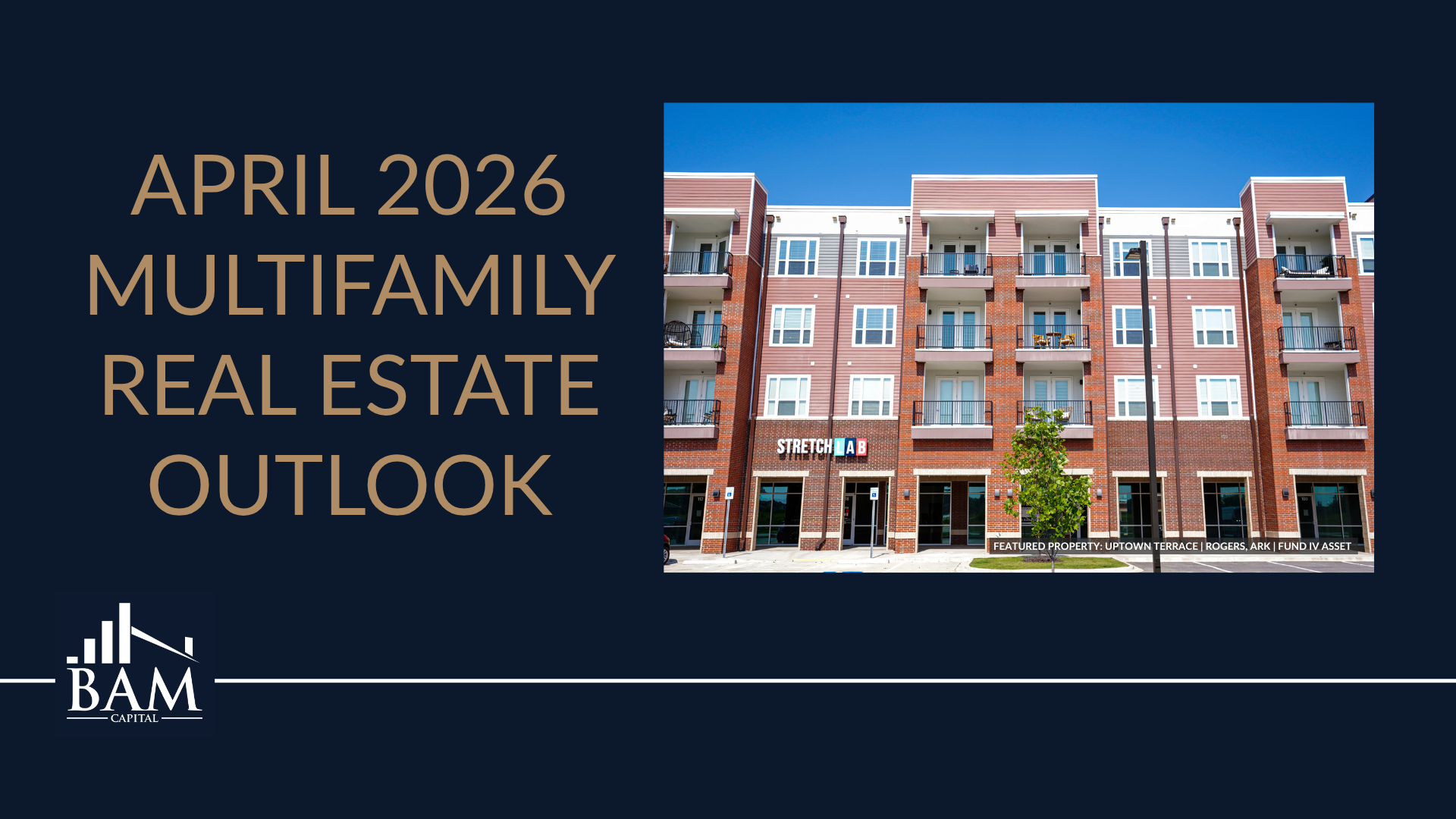
This supports long-term occupancy strength and steady rent growth across assets like Uptown Terrace (BAM Multifamily Growth & Income Fund IV).
Pittsburgh, Pennsylvania: Constrained Supply, Tightening Vacancy
Pittsburgh is emerging as one of the most supply-constrained markets in BAM Capital’s portfolio. Vacancy is projected to fall to around 3.8% in 2026, while inventory growth remains below 0.5%⁴.
With supply and demand this constrained, leasing conditions are expected to remain favorable and support continued rent growth.
The region is also attracting more than $10 billion in energy and data infrastructure investment. While these projects may not lead to large immediate job gains, they bring long-term capital into the market, support broader economic activity, and strengthen Pittsburgh’s position in emerging industries.
Pittsburgh represents a market where limited supply contributes to more consistent operating performance over time.
The Bottom Line for Investors
Across BAM Capital’s target markets, a consistent pattern is emerging: supply is slowing, demand remains steady, and vacancy is beginning to tighten.
As excess inventory is absorbed and new development remains limited, fundamentals are stabilizing.
Key takeaways:
- Slower supply bolsters future rent growth
- Job growth continues to underpin renter demand
- Tightening vacancy improves pricing power
Market conditions are improving, but performance still depends on execution. Strong operations and local market expertise are what translate these trends into consistent results. For BAM Capital investors, this highlights the importance of disciplined asset management as the market continues to normalize.
¹ Cushman & Wakefield, U.S. Multifamily Reports
² MMG Real Estate Advisors, Construction Pipeline Reports
³ Berkadia, Northwest Arkansas Multifamily 2026 Forecast Report
⁴ Marcus & Millichap, Pittsburgh Multifamily Market Report
Disclaimer: This content is for informational purposes only and is not financial, tax, legal, or investment advice, nor an offer or solicitation to buy or sell securities. Investment opportunities offered by BAM Capital and its affiliates are made pursuant to Rule 506(c) of Regulation D, available exclusively to accredited investors, as defined by the Securities and Exchange Commission (SEC) and, if applicable, qualified purchasers, as defined by Section 2(a)(51) of the Investment Company Act of 1940. Verification of accredited investor status is required before participation in any investment.
Contact BAM Capital for details on current offerings. BAM Capital and its representatives are not fiduciaries or investment advisors. The information provided is general and may not reflect individual financial goals. Financial terms, projections, or forward-looking statements contained herein are hypothetical and should not be interpreted as guarantees of future performance or safety. Such statements reflect BAM Capital’s opinion and are subject to market fluctuations, economic conditions, and investment risks. Investing in private real estate securities involves significant risks, including, without limitation, illiquidity, economic downturns, and potential loss of invested funds or capital. Past performance does not predict or guarantee future results. Historical transaction figures represent past performance across multiple deals as of the date this information was published, not a single investment transaction. BAM Capital and its affiliates do not guarantee the accuracy or completeness of this information. Prospective investors are strongly encouraged to conduct independent due diligence and consult with legal, tax, and financial advisors before making any investment decisions.
© 2026 BAM Capital. All rights reserved.