The multifamily market is moving toward a more balanced environment as new construction slows and renter demand catches up with supply. After several years of elevated deliveries, demand is now outpacing new supply across most major markets, creating a more favorable backdrop for existing properties.
That shift is becoming clearer across BAM Capital’s core markets. Kansas City continues to stand out, particularly in the Northland, while Indiana and Des Moines are showing steady improvement. Pittsburgh remains relatively stable, Northwest Arkansas still has supply to work through, and Wilmington is beginning to move into the later stages of its construction cycle.
Supply Pressure Is Easing
The national market is showing a clearer shift toward balance. CBRE reported roughly 167,500 units of net absorption in the second quarter compared with 77,700 deliveries. Demand outpaced new supply in 68 of the 69 markets tracked by CBRE, up from 47 markets in the first quarter.
New construction is slowing as well. August multifamily completions were down 35.7% from a year earlier, easing some of the competitive pressure that has weighed on occupancy and rents since 2023. At the same time, rents are starting to show some improvement. Yardi Matrix reported average advertised rent of $1,773 in August, up 0.4% from a year earlier and the strongest annual growth rate in nearly a year.
With recent Federal Reserve policy adjustments and the 10-year Treasury reaching 5.18% late in the month, borrowing costs remain elevated across the market.
Slower supply growth combined with steady renter demand presents a favorable outlook for stabilized communities as the market continues to absorb remaining inventory.
Indiana: Rent Growth Continues Across Major Markets
Indiana continues to show strong rent growth across BAM Capital’s markets. The Indianapolis-Carmel-Anderson metro recorded 93.5% occupancy and 3.5% year-over-year rent growth. Bloomington led the state with 5.6% growth, while Fort Wayne posted 2.7% growth and occupancy above 95%.
The Indianapolis market is still working through a significant amount of new supply, particularly in Hamilton County. The submarket accounted for a large share of the metro’s recent deliveries, with more units expected over the next year. That has also pushed concessions higher.
Demand remains healthy, with ApartmentIQ expecting the Indianapolis metro to absorb nearly 4,900 units over the next 12 months compared with roughly 4,100 deliveries.
For BAM Capital’s Indiana portfolio, continued job growth and rent gains are encouraging, although higher-supply submarkets will continue to face more competition in the near term.
Des Moines, Iowa: Vacancy Continues to Improve
Des Moines continues to make progress as the market absorbs its recent wave of apartment construction. Metro vacancy improved to 6.3% in the first half of 2026, down from 6.8% at the end of 2025, while average asking rent reached $1,216, up 2.9%.
New construction is still substantial, with current market data indicating roughly 3,160 units under construction and about 1,742 units targeted for completion during 2026. But development is beginning to slow, with only nine multifamily projects permitted across the metro during the first half of the year, according to Yardi Matrix.
The local economy is also supporting the market. The Iowa Economic Development Authority approved incentives for three Des Moines-area manufacturers representing $136.6 million in capital investment and 276 jobs.
For BAM Capital’s Des Moines assets, improving vacancy, steady rent growth, and a slower development pipeline point to a more stable operating environment as the market works through its remaining supply.
Kansas City: Northland Fundamentals Remain Strong
The Kansas City metro area recorded 94.5% occupancy and 2.5% year-over-year rent growth. Platte County posted roughly 3.0% stabilized vacancy and has no multifamily units currently under construction, while Clay County has only 125 units underway.
Yardi Matrix ranks Kansas City among the strongest major markets for rent growth, with rents up roughly 3% year over year. The limited construction pipeline should give existing communities more room to benefit as demand continues to catch up with supply.
The Northland is also seeing continued economic activity. Platte International Commerce Center recently filled 1.67 million square feet across three buildings, while Kansas City International Airport handled more than 7.7 million passengers through August, up 2.1% from a year earlier.
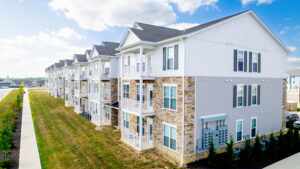
Altitude 970 and Kinsley Forest are both located in the Northland, where limited new apartment competition provides a supportive backdrop for the local market, while performance remains subject to broader economic factors.
Northwest Arkansas: Supply Pressure Remains
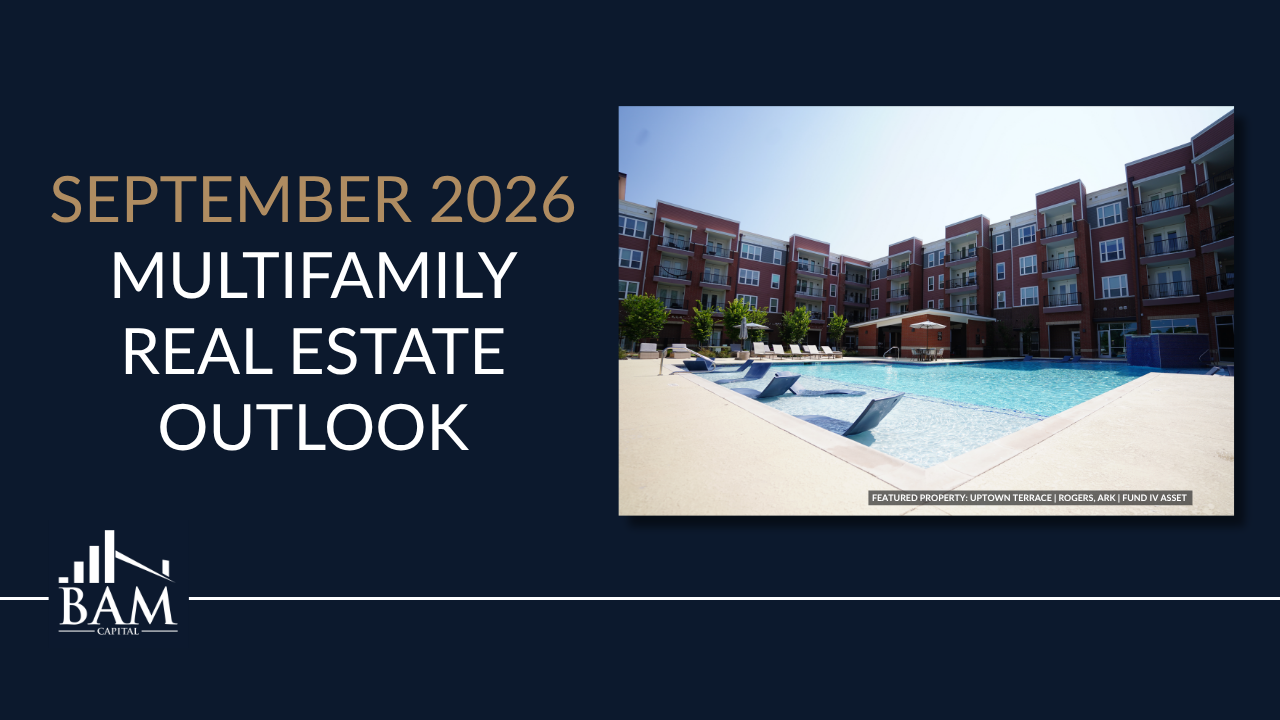
Northwest Arkansas continues to have strong long-term fundamentals, but near-term conditions remain more challenging. The Fayetteville-Springdale-Rogers metro recorded 94.1% occupancy, while rents were down 2.3% year over year. Concessions remain elevated in the areas receiving the most new supply, including the submarket surrounding Uptown Terrace.
The construction pipeline is shrinking, however. MMG estimates the metro pipeline is down 27% from a year ago, suggesting the current supply pressure should become more manageable as deliveries slow.
The region is also continuing to add jobs. Northwest Arkansas added 7,800 nonfarm jobs over the past year, reaching 305,300 in July. The $700 million AWSOM whole-health campus in Bentonville also broke ground in September, while roughly $400 million in new highway improvements recently opened.
For BAM Capital’s Uptown Terrace, the focus remains on managing competition and maintaining occupancy until the market moves through the remaining deliveries.
Pittsburgh: Stable Fundamentals, Mixed Submarkets
Pittsburgh continues to benefit from limited new supply, although conditions are becoming more uneven across submarkets. The metro area recorded 95.3% occupancy and 1.6% year-over-year rent growth, with North Pittsburgh remaining relatively stable while West Pittsburgh faces more pressure.
Concessions in West Pittsburgh are higher, and the submarket recorded negative absorption despite having no new units under construction, reflecting near-term shifts in local renter demand. For BAM Capital, Ascent 430 is positioned in the more stable North Pittsburgh submarket, while Nox is facing greater demand-side pressure in West Pittsburgh.
The region is still attracting significant investment. Aligned Data Centers recently broke ground on a 2-gigawatt data center campus in Beaver County, with roughly 3,000 construction jobs and 640 permanent positions expected.
Wilmington, North Carolina: Supply Cycle Begins to Turn
Wilmington is showing some of the clearest signs of improvement among the newer markets being monitored. The metro recorded 94.6% occupancy and 2.6% year-over-year rent growth, while vacancy fell to 11.2% in the second quarter from 17.0% a year earlier. ApartmentIQ shows deliveries down more than 57% over the past year, suggesting Wilmington is moving into the later stages of its construction cycle.
Economic growth should provide additional support. Amazon began hiring for its 3-million-square-foot fulfillment center in August, with more than 1,000 full-time positions expected. Brunswick County also continued to post strong population growth, increasing 4.7% over the year—the largest percentage increase in North Carolina.
For BAM Capital, Wilmington still needs time to absorb existing inventory, but conditions are moving in the right direction.
Disclaimer: This content is for informational purposes only and is not financial, tax, legal, or investment advice, nor an offer or solicitation to buy or sell securities. Investment opportunities offered by BAM Capital and its affiliates are made pursuant to Rule 506(c) of Regulation D, available exclusively to accredited investors, as defined by the Securities and Exchange Commission (SEC) and, if applicable, qualified purchasers, as defined by Section 2(a)(51) of the Investment Company Act of 1940. Verification of accredited investor status is required before participation in any investment.
Contact BAM Capital for details on current offerings. BAM Capital and its representatives are not fiduciaries or investment advisors. The information provided is general and may not reflect individual financial goals. Financial terms, projections, or forward-looking statements contained herein are hypothetical and should not be interpreted as guarantees of future performance or safety. Such statements reflect BAM Capital’s opinion and are subject to market fluctuations, economic conditions, and investment risks. Investing in private real estate securities involves significant risks, including, without limitation, illiquidity, economic downturns, and potential loss of invested funds or capital. Past performance does not predict or guarantee future results. Historical transaction figures represent past performance across multiple deals as of the date this information was published, not a single investment transaction. BAM Capital and its affiliates do not guarantee the accuracy or completeness of this information. Prospective investors are strongly encouraged to conduct independent due diligence and consult with legal, tax, and financial advisors before making any investment decisions.
© 2026 BAM Capital. All rights reserved.