It appears there is a growing consensus that rising interest rates will adversely impact multifamily real estate values. That risk is genuine since there is a correlation between cap rates and interest rates. However, there is a compelling case that multifamily values will remain flat, or possibly increase, in some markets once you dig deeper into the overall fundamentals.
Several macro factors in the multifamily space should benefit values and offset the pain of rising interest rates:
- supply/demand imbalance,
- inflation
- high construction costs
- would-be homebuyers continuing to rent
BAM Capital considers these factors when making investment decisions in markets like Indiana and Iowa, where most of our portfolio is currently concentrated.
Supply/Demand Imbalance
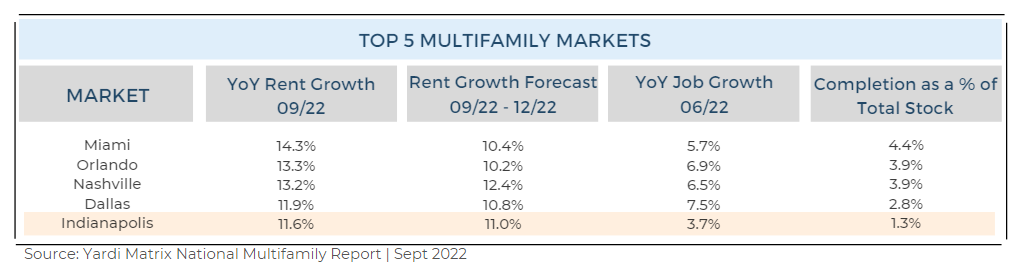
Let’s look at the current supply/demand imbalance in the multifamily asset class. The U.S. faces a pressing need to build 4.3 million new apartments by 2035, according to a recent study commissioned by the National Apartment Association (NAA) and the National Multifamily Housing Council (NMHC). The 4.3 million apartment homes needed include an existing 600,000 apartment home deficit because of underbuilding during the 2008 financial crisis. More demand than supply places upward pressure on rents, resulting in higher cash flows and potentially higher values. Indianapolis, Indiana, is a testament to a market where there is a supply/demand imbalance.
Hedge Against Inflation
Investing in multifamily assets has long been considered a superior hedge against inflation. Apartments allow owners/operators to reset rental rates as frequently as every twelve months, compared to other real estate asset classes with longer-term leases. These short-term leases provide owners/operators with the flexibility to change pricing quickly if operational costs are rising. Historically, apartment rents have tended to outpace inflation rates, as depicted in the chart on the right, unlike other asset classes.
High Construction Costs
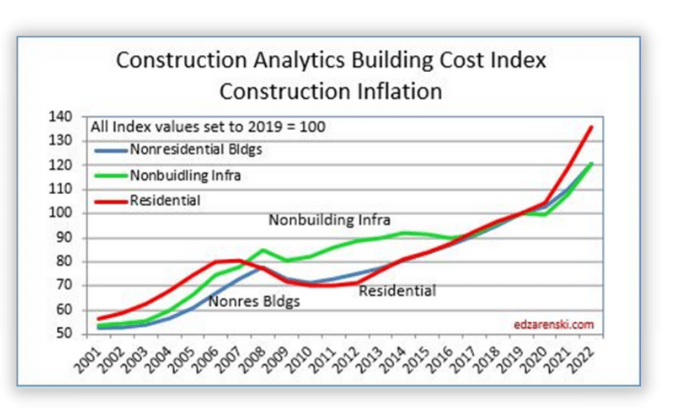
Construction costs have risen dramatically over the past year due to a confluence of events: labor shortages, supply chain disruptions, inflation, etc. By the end of 2022, CBRE’s Construction Cost Index forecasts a 14.1% year-over-year increase in construction costs as labor and material costs continue to rise. Coupling these events with rising interest rates makes it difficult and, in most cases, cost-prohibitive for developers to build. This combination reduces supply and further strengthens the supply/demand imbalance, which bodes well for cash flows and real estate values.
Would-Be Homebuyers Continue to Rent
Nobody likes rising interest rates, but it is having a positive impact on apartment fundamentals. According to the Mortgage Bankers Association, mortgage applications to purchase a home are down approximately forty percent from this time last year. Mortgage rates have more than doubled in the past year as the Federal Reserve pushed ahead with its unprecedented campaign of hiking interest rates to subdue inflation. If people can’t afford to purchase homes because of expensive mortgage payments, they will continue to rent. The larger renter pool helps the demand side of the equation. With supply relatively flat, increased demand will again place upward pressure on rental rates, resulting in higher cash flows and potentially higher real estate values. By way of example, the overall fundamentals in Des Moines, Iowa, have remained strong this year, which has attracted the eye of institutional capital.

When building a diverse portfolio of institutional-quality apartment communities, it is essential to prepare in-depth fundamental analysis at both macro and micro levels to make informed decisions. Knowing the specifics of each asset is crucial, but it is equally important to understand the overriding themes occurring in the broader and local economy. This information gives BAM Capital the utmost confidence in projecting future cash flows and a stabilized yield on cost, our favorite metric that protects investor capital and provides outsized returns.
Time will tell, but here is the real question: Do multifamily fundamentals outweigh cap rate expansion because of rising interest rates? No one has a definitive answer yet, but one thing is sure: there will be no dearth of buying opportunities during these times of economic uncertainty.
Rest assured that BAM Capital will conduct its due diligence and capitalize on every opportunity that meets our strict acquisition criteria.
Author: Tony Landa, Chief Investment Officer, The BAM Companies, December 2022