
Multifamily private placement, also called syndication, is an increasingly popular way for real estate investors to diversify their portfolios. A private placement deal is a real estate investment wherein multiple investors pool their money to invest in an asset.
Multifamily properties have many advantages over single-family homes. For example, multifamily units are much more efficient because they share common elements like laundry rooms, parking spaces, storage units, pools, etc. These shared resources lower operating costs than maintaining these elements in separate, single-family homes.
The inherent qualities of multifamily properties benefit those investing in multifamily private placement (syndication). Amenities and proximity to major economic drivers and employment centers are just two of many reasons why renting an apartment could be more attractive and affordable than single-family living. The high demand for multifamily ultimately benefits investors through increased property value.
Multifamily private placement might also be an ideal entry point for those who want to diversify their assets without the hassle of maintaining real estate themselves. This article will explore two common ways to invest in real estate passively: private placements and crowdfunding.
REAL ESTATE INVESTING VIA CROWDFUNDING
According to the largest crowdfunding platform in the world, GoFundMe, crowdfunding “is a way to raise money for an individual or organization by collecting donations through family, friends, friends of friends, strangers, businesses, and more.” [1] You may have heard of other crowdfunding platforms such as Kickstarter, Crowdfundr, or Indiegogo. Each platform allows users to create campaigns with a set funding goal, a deadline, and the option to offer rewards or incentives to backers or investors in exchange for donations or investments. [3]
Backers differ from investors as they are typically motivated by the impact of a project or idea and usually receive non-monetary rewards (exclusive content, early access to a product, etc.). However, investors entrust their money in a venture with the primary motivation of financial gain (stocks, real estate, bonds, etc.). [4]
Crowdfunding materialized as a result of the Great Financial Crisis of 2008, as stricter lending practices from banks made obtaining credit for small businesses nearly impossible. [5] Regulated under the JOBS Act of 2012, this unorthodox ability to secure financing completely changed the game for novice entrepreneurs, NPOs, artists, and investors. One financial analyzer claims that crowdfunding sites “typically earn revenue by taking a percentage of the funds raised.” [5] In 2016, the framework of the 2012 JOBS Act was reworked to make crowdfunding more accessible to the general public. In other words, this provision allowed non-accredited investors to participate in crowdfunding offerings.
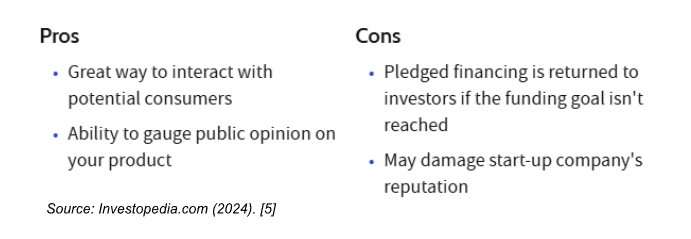
The difference between investing in real estate via crowdfunding and investing in a private placement can be summarized in three words: barriers to entry. Some real estate crowdfunding sites invite investors regardless of their accreditation status and maintain significantly lower minimum investment requirements. Equity-based crowdfunding initiatives are now regulated by the SEC. This means factors such as offering amounts, online transactions, and disclosures are limited or restricted. For example, according to SEC regulations, a company can raise a maximum of $5 million through equity crowdfunding within 12 months. [6] You can review the SEC crowdfunding factsheet for more information.
MULTIFAMILY PRIVATE PLACEMENT (SYNDICATION) PROS & CONS
Multifamily private placement/syndication can be highly profitable, but it still has a few cons. For example, some risks may come from poor property management or market changes that reduce property value. Some sponsors/syndicators also charge excessively high fees, so consider working with a trustworthy syndicator with an award-winning track record: BAM Capital. [2]
A multifamily private placement deal has plenty of benefits that should not be understated. It can allow investors to put their money into a potentially profitable real estate property without becoming a landlord. No physical, laborious hassle is involved, and there’s no need to manage residents or emergencies involving the property. As an investor, you don’t need to do any maintenance or worry yourself about day-to-day operations.
Multifamily properties can be small, tightly managed communities where the syndicator and/or the property management company handle all work and services. They can also be larger, institutional-grade developments with multiple amenities, full-time on-site staff, and more complex operations.
There is no single “best” multifamily strategy or formula for finding the best deal. Multifamily private placement depends on many factors, including location, occupancy rates, and local demand. However, in passive investing, arguably the most essential factor to consider before you sign on the dotted line and put up your money is the sponsor—the person or team you’re investing with. You want a sponsor with a proven track record in real estate and private placements, deep expertise in property management, and a history of successfully navigating multiple market cycles. They should be trustworthy, transparent, and communicative, with solid business practices and a clear investment strategy.
CONNECT WITH AN INSTITUTIONAL REAL ESTATE OWNER/OPERATOR
BAM Capital prioritizes accredited investors who want to enjoy passive income and all the other benefits of multifamily private placement. As the private equity arm of The BAM Companies, BAM Capital has been focusing on buying the most profitable assets and staying disciplined in its investment thesis. BAM Capital’s investment strategy creates forced appreciation while mitigating investor risk. To date, the brand has successfully managed over $1.7 billion in assets across ~9,000 apartment units.
Remember that no investment is without risk. Before making financial decisions, consult your investment advisor and schedule a call with a BAM Capital investment team member. [2]
Disclaimer: All investments carry risk, including potential loss of capital. This content is for informational purposes only and is not financial, legal, or investment advice, nor an offer or solicitation to buy or sell any security. Consult an independent advisor for personalized guidance and contact BAM Capital for details on current offerings. BAM Capital and its representatives are not fiduciaries or investment advisors. The information provided is general and may not reflect individual financial goals. Any financial terms, projections, or forward-looking statements contained herein are hypothetical in nature and should not be interpreted as guarantees of future performance or safety. Such statements reflect Bam Capital’s opinion and are subject to market fluctuations, economic conditions, and investment risks. Past performance does not predict future results. BAM Capital and its affiliates do not guarantee the accuracy or completeness of this information. Bam Capital offers investment opportunities under Rule 506(c) of Regulation D exclusively for accredited investors as defined by the SEC. Verification of accredited investor status is required prior to participating in any investment.
© 2025 Bam Capital. All rights reserved.